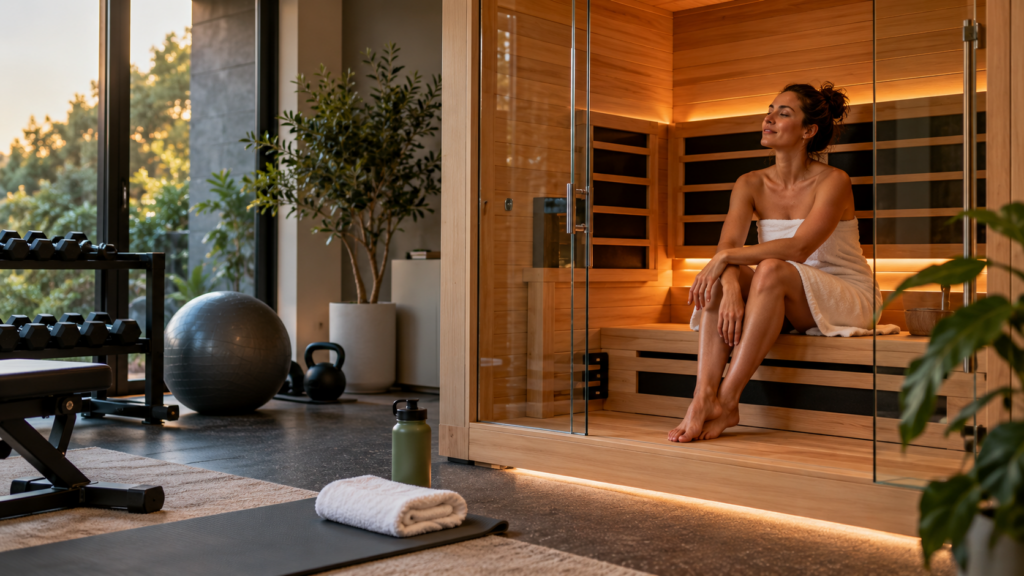

For most people, using a sauna after a workout is the more practical choice. Post-workout sauna sessions can encourage relaxation and may help you feel less tense after exercise. Using a sauna before training is possible, but prolonged heat exposure may leave you dehydrated or fatigued before your workout begins.
In this guide, we explore the benefits and limitations of both approaches, recommended sauna timing, and how traditional, infrared, and hybrid saunas can fit into your fitness routine.
Is It Better to Use a Sauna Before or After a Workout?
For most fitness routines, after your workout is the better time to use a sauna. Once your exercise session is complete and you have cooled down and rehydrated, a sauna can provide a comfortable environment for relaxation.
Using a sauna before exercise may help some people feel physically relaxed, but it does not replace a proper warm-up. Spending too much time in the heat before training can increase sweating and fluid loss, potentially affecting performance.
Sauna Before vs. After a Workout: Quick Comparison
| Factor | Before Workout | After Workout |
|---|---|---|
| Primary purpose | Relaxation before exercise | Relaxation after exercise |
| Muscle comfort | May temporarily ease stiffness | May help muscles feel relaxed |
| Main concern | Fatigue or dehydration before training | Additional heat stress after exertion |
| Best fit | Occasional brief sessions | A regular wellness routine |
Benefits of Using a Sauna After a Workout
After strength training, running, cycling, or other physical activity, many people enjoy the warmth and quiet environment of a sauna. While research into specific athletic recovery outcomes is still developing, several potential benefits make post-workout sauna use appealing.
1. Muscle Relaxation
Heat exposure can promote a feeling of physical relaxation. After an intense training session, sitting comfortably in a sauna may help relieve the sensation of muscle tightness.
However, sauna use should not be considered a proven treatment for exercise-related muscle damage or a substitute for adequate recovery time.
2. Increased Skin Blood Flow
Sauna heat causes blood vessels near the skin to widen as the body works to regulate its temperature. Heart rate also typically increases during heat exposure.
These physiological responses are normal, but they do not necessarily mean that sauna sessions accelerate muscle repair.
3. Relaxation and Stress Management
A sauna session can create a natural transition between exercise and everyday activities. The warm environment, combined with time away from distractions, may support a sense of calm and relaxation.
4. Building a Consistent Wellness Routine
For people who enjoy regular exercise, sauna bathing can become part of a broader wellness routine that also includes hydration, nutritious meals, sufficient sleep, and appropriate rest days.

Should You Use a Sauna Before a Workout?
Using a sauna before exercise is not automatically harmful for every healthy adult, but it requires additional consideration.
Some people enjoy a brief sauna session before low-intensity activities because the warmth helps them feel relaxed. However, there is limited evidence that pre-workout sauna use improves athletic performance.
For demanding workouts, including heavy strength training, interval training, or endurance exercise, prolonged sauna exposure beforehand may be counterproductive.
Potential Drawbacks of Pre-Workout Sauna Use
- Dehydration: Sweating before exercise can increase fluid losses.
- Fatigue: Heat exposure may make demanding exercise feel more difficult.
- Elevated heart rate: Sauna heat places additional demands on the cardiovascular system.
- Reduced exercise readiness: Feeling overheated or lightheaded can interfere with training.
If you choose to use a sauna before exercise, keep the session brief, allow time to cool down, and make sure you are properly hydrated. Always complete a movement-based warm-up appropriate for your workout.
How Long Should You Stay in a Sauna After a Workout?
For healthy adults who are new to sauna bathing, a short session of approximately 5 to 10 minutes is a reasonable starting point. People accustomed to sauna use may tolerate longer sessions, but duration should depend on temperature, personal comfort, and individual health.
There is no universally proven sauna duration that maximizes muscle recovery. Longer sessions are not necessarily more beneficial.
A Simple Post-Workout Sauna Routine
- Finish your workout: Complete your training session and gradually reduce exercise intensity.
- Cool down: Allow your breathing and heart rate to settle before entering the sauna.
- Rehydrate: Replace fluids lost during exercise, and consider electrolytes after prolonged or heavy sweating.
- Begin with a short sauna session: Start with 5 to 10 minutes at a comfortable temperature.
- Exit and cool down gradually: Leave immediately if you feel dizzy, weak, nauseated, or excessively hot.
- Continue recovery: Prioritize hydration, nutrition, and adequate sleep.
Avoid sauna bathing immediately after exercise if you are overheated, dehydrated, or feeling unwell.
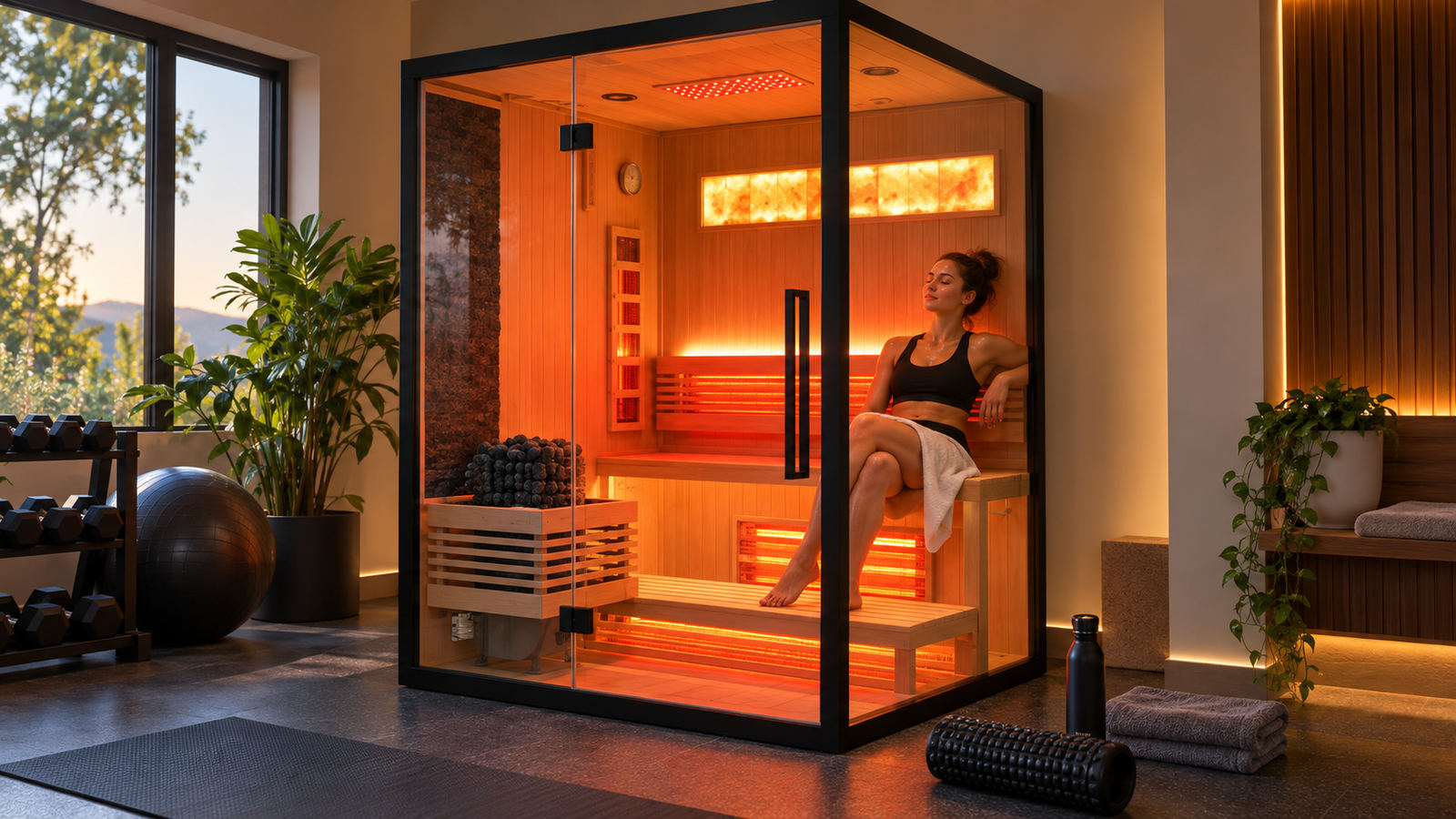
Traditional vs. Infrared Sauna After a Workout
Both traditional and infrared saunas can provide a relaxing heat experience, but they warm the body in different ways.
Traditional Saunas
Traditional saunas use a heater, typically with sauna stones, to warm the surrounding air. They generally operate at higher air temperatures than infrared saunas.
For people who enjoy classic sauna bathing, the traditional experience offers an immersive environment with adjustable heat and, where supported by the heater, steam created by carefully adding water to the stones.
Infrared Saunas
Infrared saunas use infrared emitters to deliver radiant heat and generally operate at lower air temperatures. Some users prefer this experience because the surrounding air feels less intensely hot.
Research has not conclusively established that infrared sauna bathing produces superior post-workout muscle recovery compared with traditional sauna bathing.
Hybrid Saunas
Hybrid saunas combine traditional heating and infrared technology in one unit. Depending on the model, users can select different heating modes to suit their preferences.
For homeowners interested in both experiences, hybrid models can provide additional flexibility when building a personal wellness space.
Explore the sauna options available from Icelandic Saunas to learn more about traditional, infrared, and hybrid designs.
Can Sauna Use Help With Muscle Soreness?
Heat can temporarily ease feelings of stiffness and discomfort, which is one reason sauna bathing is popular after exercise.
However, there is not enough consistent clinical evidence to conclude that sauna use reliably prevents delayed-onset muscle soreness (DOMS) or speeds muscle tissue repair.
If you experience significant soreness after exercise, prioritize rest, appropriate movement, hydration, and nutrition. Persistent or severe pain should be evaluated by a healthcare professional.
Important Sauna Safety Tips for Active Adults
Sauna bathing exposes the body to heat stress, so safe use is especially important after physical exertion.
- Drink adequate fluids before and after sauna bathing.
- Avoid sauna sessions when you are dehydrated, ill, or excessively fatigued.
- Do not combine sauna bathing with alcohol.
- Exit immediately if you feel dizzy, nauseated, faint, or uncomfortable.
- Follow the manufacturer’s temperature and operating instructions.
- Consult a healthcare professional before sauna use if you have cardiovascular conditions, blood pressure concerns, are pregnant, or take medications that affect heat tolerance.
People with unstable heart conditions or symptoms such as chest pain should not use a sauna without appropriate medical evaluation.
Creating a Home Sauna Wellness Routine
Having access to a sauna at home can make it easier to incorporate relaxing heat sessions into your schedule without an additional trip to a gym or wellness facility.
Whether you prefer traditional sauna heat, infrared technology, or a combination of both, the ideal sauna depends on your available space, preferred experience, and personal wellness goals.
Icelandic Saunas offers a range of sauna models designed for different environments and preferences, including traditional, infrared, hybrid, and outdoor configurations.
Frequently Asked Questions About Sauna Before or After a Workout
Is it better to sauna before or after lifting weights?
After lifting weights is generally more practical. Using a sauna before heavy strength training can contribute to fatigue and dehydration. After training, cool down and rehydrate before beginning a short sauna session.
Is a sauna good after cardio?
A sauna can be a relaxing addition after cardio, provided you have cooled down and replaced lost fluids. Avoid additional heat exposure if you feel overheated, lightheaded, or dehydrated.
Does a sauna help muscles recover faster?
Sauna bathing may help people feel relaxed and less stiff, but evidence that it consistently accelerates muscle repair or recovery remains limited.
Can I use an infrared sauna after a workout?
Yes. Healthy adults who tolerate heat well may enjoy an infrared sauna after exercising. Begin with short sessions and follow the sauna manufacturer’s instructions.
Does sauna use replace a warm-up?
No. Even if you use a sauna before training, you should still complete an appropriate warm-up that includes movements relevant to your planned exercise.
Should I shower before entering a sauna after exercise?
A brief shower after your workout can help remove sweat and improve hygiene before entering a sauna. Allow your body to cool down and dry off before beginning the session.
Final Verdict: Sauna Before or After a Workout?
For most people, using a sauna after a workout is the preferred option. It allows you to complete your exercise without additional pre-workout heat stress and creates an opportunity to relax afterward.
The key is moderation. Cool down, stay hydrated, begin with short sessions, and listen to your body’s response to heat.
Whether you prefer a traditional, infrared, or hybrid sauna, a thoughtfully designed sauna experience can complement a balanced fitness and wellness lifestyle.
Bring the Sauna Experience Into Your Wellness Routine
Discover the traditional, infrared, and hybrid sauna options available from Icelandic Saunas. Our team can help you explore models that suit your space, preferences, and wellness goals.
Health information: This article is intended for general education and does not replace personalized medical advice. Individual heat tolerance and medical considerations vary.